AV Technology in New Cruise Ship Construction
Background and Context
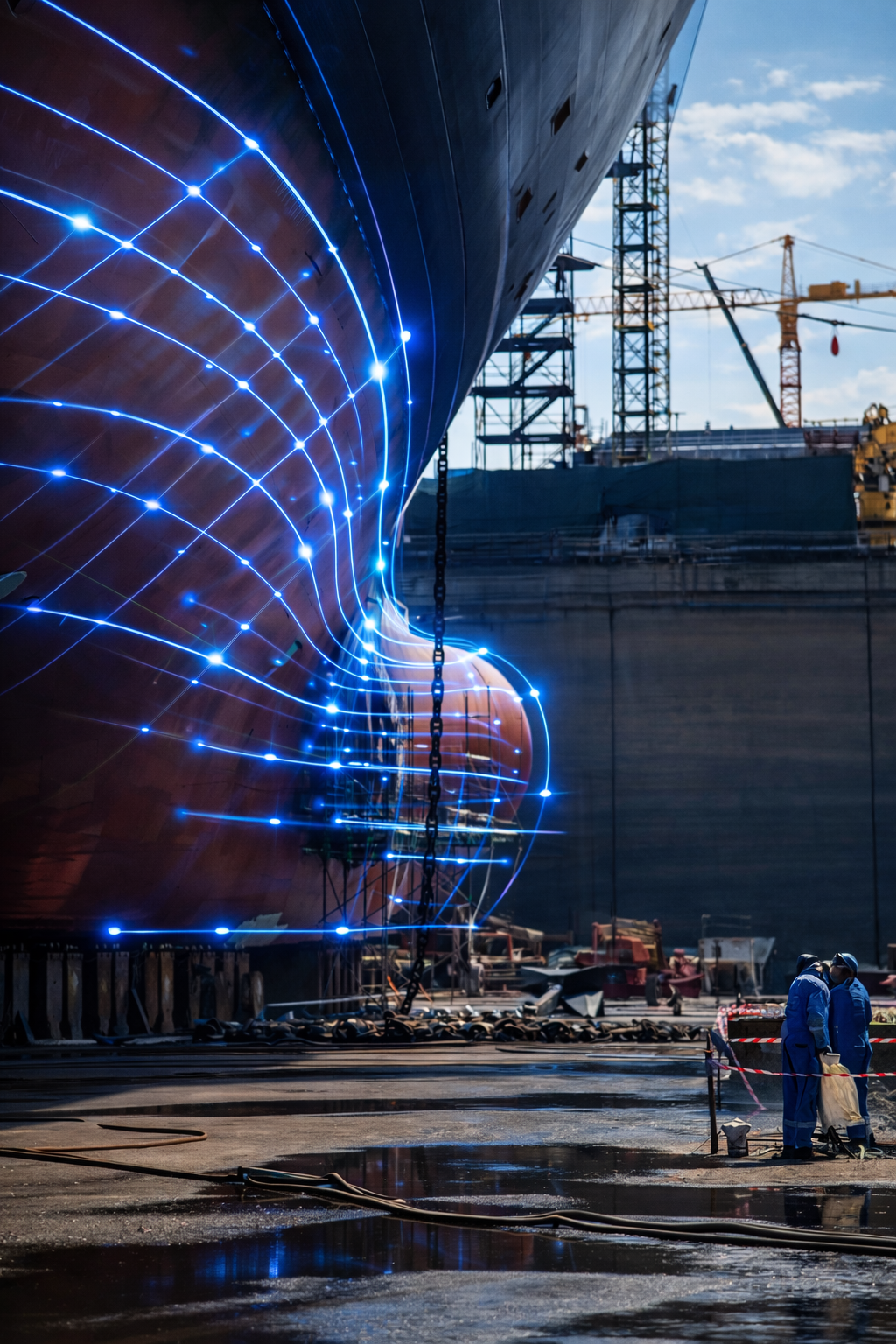
New construction projects in the cruise industry are characterized by a high degree of technical and organizational complexity. Tight shipyard schedules, international project stakeholders, regulatory requirements, and maritime environmental conditions call for a structured, process-oriented engineering approach. AV system integration in shipbuilding is subject to different conditions than comparable projects on land.
PROTONES views maritime system integration not merely as the delivery of products, but as comprehensive, project-specific responsibility for planning, integration, commissioning, and defined services during ongoing operations—all within the agreed-upon contractual framework of the newbuild project.
New maritime construction projects as a systems architecture task
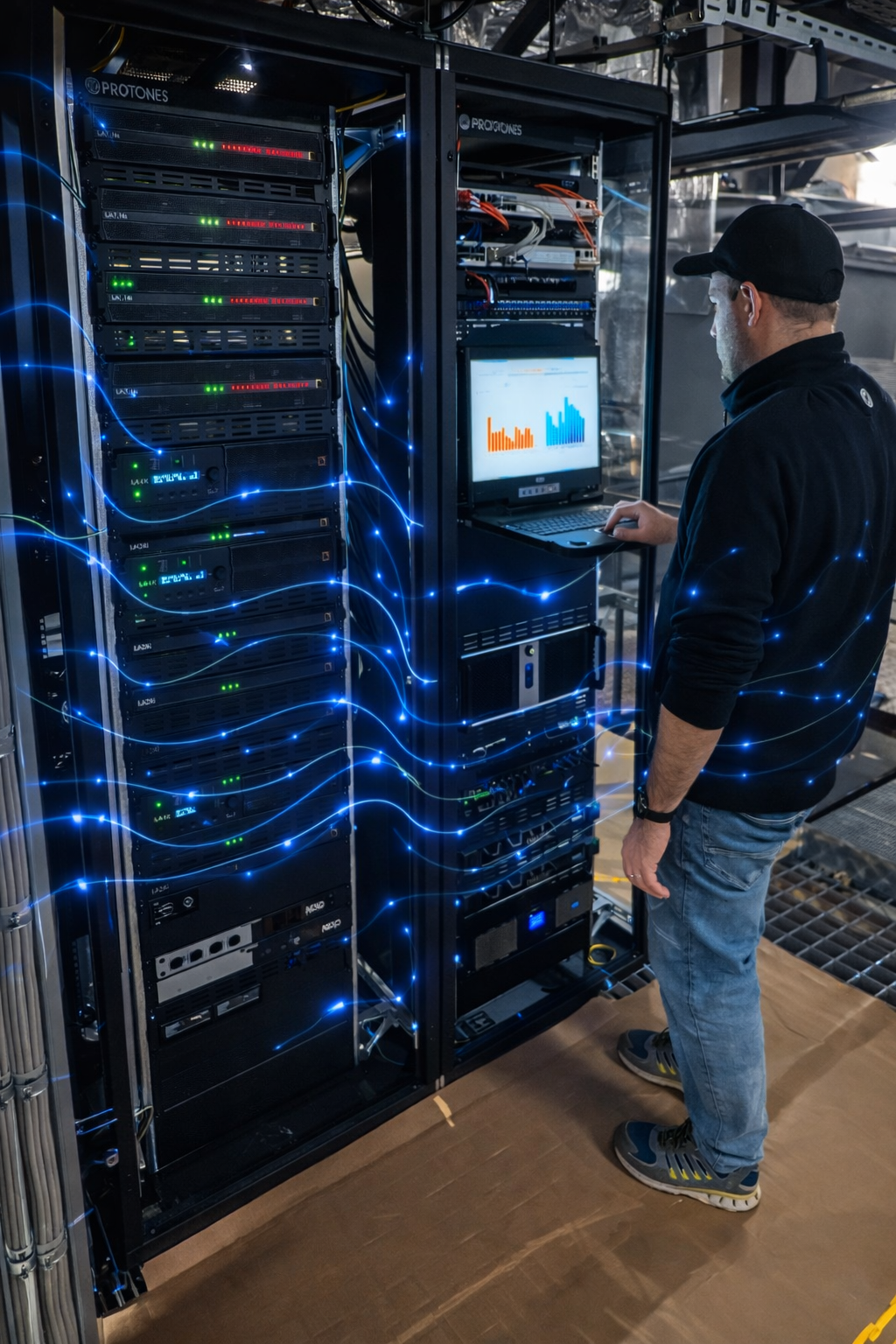
A cruise ship is a highly interconnected technical system. Entertainment areas, theaters, multipurpose rooms, LED installations, and sound and control systems are all interconnected in terms of function, energy, and infrastructure. In a new-build project, this architecture is defined and documented as part of the overall planning process and coordinated with all involved trades.
Unlike many land-based AV projects, in shipbuilding, all cable routes, network topologies, power reserves, and interfaces are planned from scratch. This planning is closely integrated into the shipyard’s scheduling and sequence of trades. In addition, classification specifications, fire safety requirements, vibration and humidity loads, and electromagnetic interference must be taken into account.
Typical coordination issues arise, for example, when coordinating cable routes with HVAC and structural steelwork, ensuring that cable trays comply with fire safety regulations, or defining network capacity reserves for future expansions. Energy requirements and thermal loads must also be coordinated with the ship’s power supply. This configuration requires a dedicated system architecture designed for maritime conditions.
From Component Logic to Infrastructure Responsibility
In new construction projects, AV systems are not viewed in isolation but as an integral part of the operational infrastructure. They influence entertainment offerings, information systems, and operational processes in equal measure. What matters, therefore, is not the individual product but the functionality of the overall system in conjunction with related systems.
In this environment, risks often arise from unclear interfaces or ambiguously defined responsibilities. A lack of alignment between the network design and the shipping company’s IT requirements, incomplete documentation for classification approvals, or unclear responsibilities regarding FAT and SAT deviations can lead to increased coordination efforts. Subsequent layout changes also have a direct impact on cabling, load planning, and schedules. In the tightly scheduled shipyard environment, this can result in re-engineering during the docking phase or additional coordination loops.
In this context, system integration refers to the structured management of these dependencies and the clear definition of interfaces with the shipyard, design firms, IT, interior fit-out teams, and other project stakeholders.
Engineering depth as a factor in economic stability
In complex integration projects, the root causes of problems often lie in the design and planning phases. Imprecise definitions of interfaces, insufficient performance reserves, or uncoordinated control logic can have a disproportionately large impact later in the project.
In new shipbuilding, making changes is particularly time-consuming because shipyard schedules are tightly packed and multiple trades work in parallel. Changes made during the outfitting or docking phase disrupt existing workflows and increase the need for coordination.
A robust engineering process therefore begins with a structured analysis of requirements and usage in consultation with the operator and planners. Building on this, interdisciplinary interfaces are defined in detail, system architectures are validated, and documentation structures are designed to support both acceptance processes and subsequent operations. The goal is to reduce planning uncertainties and improve the predictability of technical and organizational processes.
Shipyard Logic and Organizational Requirements
New shipbuilding projects follow an industrial schedule. Dock times, outfitting dates, and acceptance inspections are contractually defined. Any delays have a direct impact on downstream processes.
For system integration, this means early material planning that takes maritime approvals into account, a high degree of prefabrication to reduce installation times on board, and clearly defined decision-making and escalation procedures. FAT and SAT processes must also be coordinated with the shipyard and the operator and scheduled accordingly.
PROTONES acts as a project-based AV systems integrator and, depending on the specific contract model, handles the technical coordination of the AV systems as well as interface coordination with the shipyard, specialist designers, and other stakeholders. Overall ship design and construction responsibility at the shipyard remain with the respective contracting parties.
Life-cycle orientation in the context of new construction
Once the technical handover is complete, operational service begins under real-world conditions. Cruise ships operate globally, with high passenger loads and tight turnaround times. Technical malfunctions have an immediate impact on operational processes.
A lifecycle-oriented integration therefore takes into account, as early as the planning phase, structured system documentation for operation and maintenance, defined spare parts strategies, and clearly defined support and escalation models. Remote access concepts are also incorporated within a coordinated security framework. The goal is to reduce unplanned interventions during ongoing operations and to ensure long-term technical operational capability.
Strategic Classification
Technical decisions made during new construction have a lasting impact on day-to-day operations for many years to come. System architectures, redundancy concepts, and documentation standards influence the scalability, serviceability, and integrability of future technologies.
System integration is therefore an interdisciplinary field that bridges technology, organization, and operations. Its quality determines how reliably, transparently, and adaptably an AV system can be operated in a maritime environment.
Conclusion
AV system integration in the construction of new cruise ships requires a specialized engineering approach tailored to the maritime environment. It combines system architecture, interface management, process control, and lifecycle planning within a regulated and time-sensitive environment.
A purely product-focused approach often falls short in the context of new construction. What matters most is overall system responsibility within the defined project and contractual framework.
PROTONES takes on this role on a project-by-project basis as an AV systems integrator—from designing the system architecture and handling integration and commissioning to providing agreed-upon service and support during operation.
Are you planning a new construction or refit project?
The timing and manner of involving an AV system integrator depend on the specific project model. Clarifying the system architecture and interfaces early on can help reduce risk, depending on the model chosen.